The Ultimate Guide to Commercial Window Cleaning Maintenance
For modern businesses, the exterior of your building is your first handshake with the world. In cities across California, New York, Texas, and Florida, where skyscrapers and retail hubs define the landscape, pristine windows are not just about aesthetics—they are a core component of facility management and brand identity.
The Impact of Clean Glass on Business Perception
When a client or partner approaches your corporate headquarters, their first impression is formed before they even walk through the front door. Smudged, dusty, or streaked windows signal a lack of attention to detail. Conversely, crystal-clear glass conveys professionalism, transparency, and a high standard of care. This "first impression" factor is why commercial window cleaning is considered an essential marketing expense rather than just a maintenance task.
Determining the Ideal Cleaning Frequency
How often should your commercial windows be cleaned? There is no one-size-fits-all answer, but several factors influence the schedule:
- Location & Environment: Buildings near high-traffic roads or industrial zones in cities like Los Angeles or New York require monthly exterior cleaning due to exhaust soot and particulate matter.
- Building Architecture: High-rise structures with significant glass surface area often adopt a rotating schedule where different sections are cleaned on a quarterly basis.
- Business Type: Retail storefronts and restaurants typically require weekly cleanings at eye level because fingerprints and food splashes are highly visible.
- Weather Patterns: States like Florida and Texas experience high humidity and sudden rainstorms, which can leave mineral deposits on glass if not serviced regularly.
Safety Standards and Liability
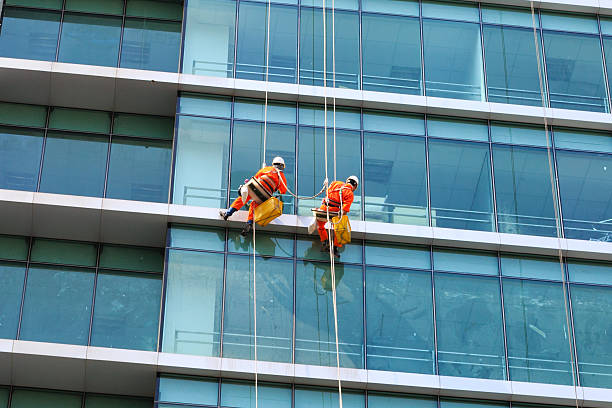
Commercial window cleaning—especially high-rise work—is an inherently high-risk profession. Professional services must adhere to strict OSHA (Occupational Safety and Health Administration) standards. This includes:
Fall Protection System: Use of certified harnesses, anchors, and lifelines.
Equipment Certification: Regular inspection of ropes, Bosun’s chairs, and Building Maintenance Units (BMUs).
Choosing an "uninsured" or "unregulated" service to save costs exposes the property owner to massive liability in the event of an accident.